
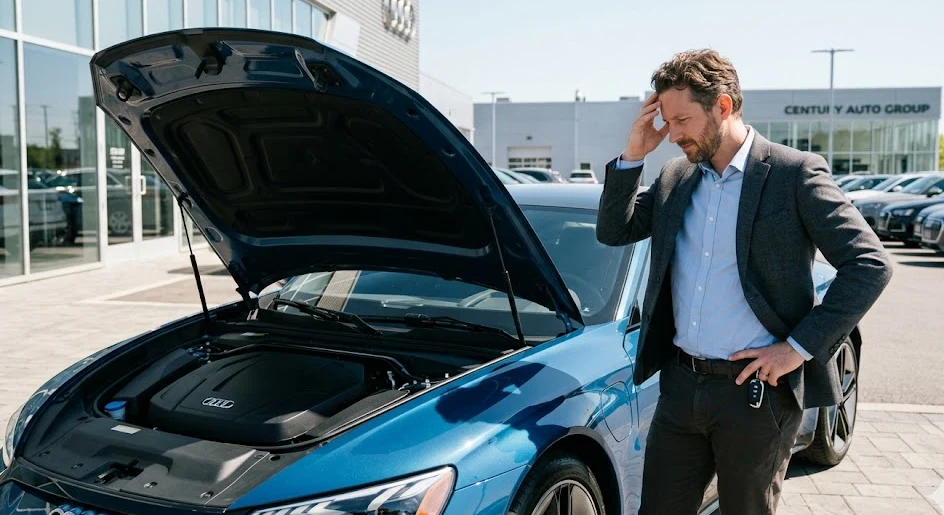
Stuck with a defective vehicle? Our California lemon law attorneys pursue buybacks, refunds, and replacements under the Song-Beverly Act — at no upfront cost to you.




If your new or used vehicle has spent weeks in the shop for the same problem, you may have a lemon law claim — and California’s lemon law is among the strongest in the nation, often requiring the manufacturer to pay your attorney’s fees.
California’s lemon law is the Song-Beverly Consumer Warranty Act. It requires a manufacturer to repurchase or replace a vehicle when a warranty-covered defect substantially impairs its use, value, or safety and cannot be repaired after a reasonable number of attempts. If it qualifies, you may be owed a refund or a replacement, and the manufacturer typically pays your attorney fees.
California’s lemon law, formally the Song-Beverly Consumer Warranty Act, protects buyers and lessees of vehicles that the manufacturer cannot repair after a reasonable number of attempts. If your car, truck, SUV, or motorcycle has a defect covered by warranty that substantially impairs its use, value, or safety, the manufacturer may be required to repurchase or replace it.
A vehicle is generally presumed to be a “lemon” if the manufacturer or its dealer has made a reasonable number of repair attempts for the same issue, or if the vehicle has been out of service for an extended period while under warranty. Because the law is fact-specific, an experienced lemon law attorney can quickly tell you whether your repair history qualifies.
A successful lemon law claim can result in a full buyback (refund of your down payment, monthly payments, and payoff of your loan, minus Statutory Deductions), a comparable replacement vehicle, or a cash settlement that lets you keep the car. In most qualifying cases, the manufacturer is also responsible for your attorney’s fees and costs — which is why we handle lemon law claims at no upfront cost to you.
Consumer Warranty · Song-Beverly Act Violations · Products Liability & Warranty
Buying used? See our guide to the used car lemon law in California.
California’s lemon law lives in the Song-Beverly Consumer Warranty Act, and its vehicle-specific provisions are known as the Tanner Consumer Protection Act, codified at California Civil Code section 1793.22. The general standard is four repair attempts for the same problem, or more than 30 days out of service, within the first 18 months or 18,000 miles.
The lower two-attempt standard for defects likely to cause death or serious bodily injury comes from Senate Bill 1718, enacted in 2000. Its purpose was to reduce how many times a consumer must experience a serious safety problem before the lemon law’s protections become available. That rule has been part of California law for over two decades.
California’s lemon law was significantly amended by Assembly Bill 1755, signed on September 29, 2024, with most provisions taking effect January 1, 2025. A follow-up measure, Senate Bill 26, was signed in April 2025.
An important distinction: these changes are procedural. They affect how and when a claim must be brought, including notice requirements and filing deadlines. They did not change whether a defective vehicle qualifies or what a consumer can recover.
SB 26 created a voluntary opt-in system. A manufacturer that opts in commits to the AB 1755 procedures for at least five years, and the California Department of Consumer Affairs publishes the official list of participating manufacturers. Most major automakers have opted in. If a manufacturer has not opted in, the claim proceeds under the earlier Song-Beverly framework, which allows a longer period to file.
The practical result is that two vehicles with identical defects can follow different procedural paths depending on the manufacturer. Because the deadlines differ, having a repair history reviewed early matters more now than it did before 2025. This is general information, not legal advice; contact our office to discuss how the current rules apply to your vehicle.
Estimate your potential recovery with our lemon law buyback calculator, or read about how long a lemon law case takes and whether private sales qualify. Lemon law help by make: Mercedes-Benz, Ford, and Chevrolet.
There is no single magic number, but California law generally presumes a vehicle is a lemon if the manufacturer has made a reasonable number of repair attempts for the same warranty defect, or if the vehicle has been out of service for repairs for an extended period (often around 30 days) while under warranty. The exact threshold depends on the severity of the defect and your repair history.
Yes. The Song-Beverly Act can cover used and certified pre-owned vehicles that are still under the manufacturer’s original or certified warranty. If your used vehicle has an unfixable, warranty-covered defect, you may have a valid claim.
In most qualifying California lemon law cases, the manufacturer is required to pay the consumer’s reasonable attorney’s fees and costs under the Song-Beverly Act. That means we typically represent lemon law clients at no upfront cost — you keep your full recovery.
California lemon law claims are generally subject to a four-year statute of limitations, but the clock can start running from when you first noticed the defect. Because deadlines can be complicated, it is best to speak with an attorney as soon as you suspect your vehicle is a lemon.
Most California lemon law claims are resolved without a trial. A claim is strongest when the repair history clearly documents the same defect being presented multiple times under the manufacturer’s warranty. Thorough repair orders and invoices are usually what decide the outcome.
You generally need proof of purchase or lease, the manufacturer’s warranty, and every repair order showing the dates and the problem reported. Keep any correspondence with the dealer or manufacturer as well.
SB 1718, enacted in 2000, lowered the threshold for defects likely to cause death or serious bodily injury from four repair attempts to two, so that consumers do not have to endure a serious safety problem repeatedly before the lemon law applies.
AB 1755 was signed on September 29, 2024, with most provisions effective January 1, 2025. It changed the procedure for bringing a claim, including notice requirements and deadlines. It did not change which vehicles qualify or what a consumer can recover.
Whether AB 1755 applies depends on whether your vehicle's manufacturer opted in under SB 26. The California Department of Consumer Affairs publishes the list of participating manufacturers. If a manufacturer did not opt in, the claim proceeds under the earlier framework, which allows a longer period to file.
A buyback is a refund of what you paid — down payment, monthly payments, and loan payoff — reduced by a statutory deduction for the miles driven before the defect was first reported.
Yes. The Song-Beverly Act protects both buyers and lessees of vehicles sold with a manufacturer’s warranty in California.
Possibly. What matters is that the defect was first reported while the warranty was in effect. Claims can often be pursued after the warranty ends if the problem began during the warranty period.
Get a no-fee, no-obligation case evaluation today.
We represent lemon law clients throughout California. Explore our services by area: