
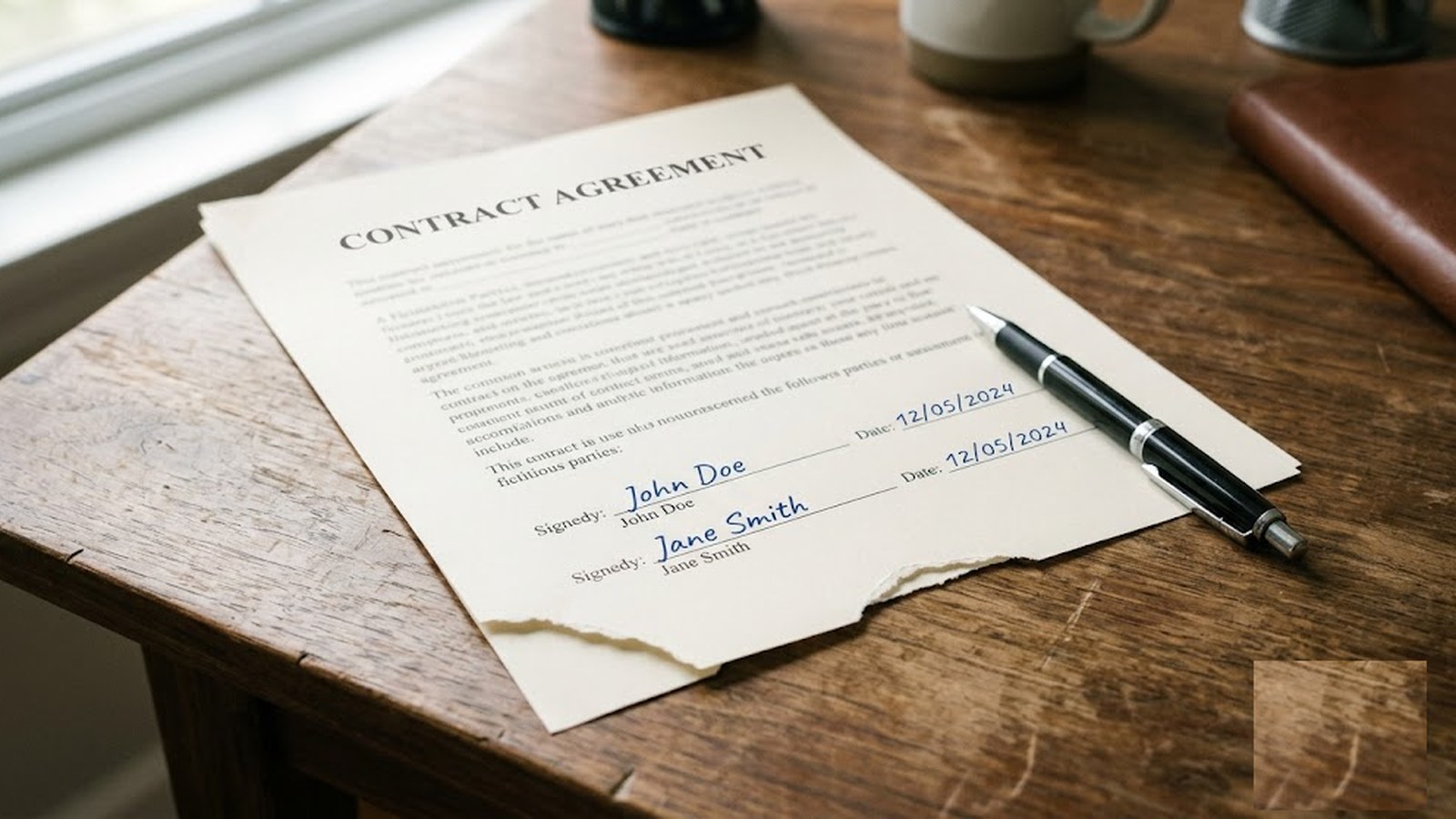
When a contract is broken in California, your main options are informal negotiation, mediation or arbitration, and a breach-of-contract lawsuit seeking damages or enforcement, and the right path depends on the contract and your goals.




 Written by Babak Hashemi, Esq.
When a contract is broken in California, your main options are informal negotiation, mediation or arbitration, and a breach-of-contract lawsuit seeking damages or enforcement, and the right path depends on the contract and your goals.
If the other party broke your contract, you generally have three paths: try to resolve it directly, use an alternative process like mediation or arbitration, or file a breach-of-contract lawsuit seeking money damages or enforcement of the agreement.
Which one fits depends on the contract's terms, the amount at stake, and your relationship with the other side.
A breach-of-contract claim in California generally requires showing that a valid contract existed, that you did your part, that the other side failed to do theirs, and that you suffered harm as a result.
Clear records of the agreement and the parties' conduct make this far easier to establish.
Depending on the situation, remedies can include compensatory damages to cover your losses, specific performance requiring the other party to do what they promised, or rescission to undo the deal.
If your contract has an attorney's-fees clause, the prevailing party may also recover fees.
Many contract disputes never reach trial. A well-drafted demand letter, direct negotiation, or mediation can resolve the matter faster and at lower cost, preserving business relationships where possible.
An attorney can help you choose the approach most likely to protect your interests.
This is general information, not legal advice, and contracts vary widely. For help with a specific dispute, contact The Hashemi Law Firm for a no fee case evaluation.
A party harmed by a breach is generally expected to take reasonable steps to limit its losses. Damages can be reduced where reasonable steps were available and not taken.
Documenting the steps you did take is as useful as documenting the breach itself.
Not every enforceable agreement is a signed document. Oral contracts can be enforceable in California, though certain agreements must be in writing, and the applicable deadline is generally shorter for oral contracts.
Emails, invoices, and course of dealing often supply the terms where no formal contract exists.
Learn more about our business disputes practice, or read related articles on our blog.
The Hashemi Law Firm represents clients throughout California from two Orange County offices — Foothill Ranch and Costa Mesa — with service across the San Francisco Bay Area and the Inland Empire and San Diego. Call (949) 464-8529 or contact us for a no fee case evaluation.
Every situation is different. For advice about your specific matter, contact The Hashemi Law Firm for a no fee consultation.
Generally direct negotiation, an alternative process such as mediation or arbitration, or a lawsuit seeking damages or enforcement of the agreement.
Generally that a valid contract existed, that you performed your obligations, that the other party did not, and that you suffered harm as a result.
Often only if the contract contains an attorney-fee provision, since California generally requires each side to bear its own fees absent a statute or agreement.
Send us a few details and we’ll reach out. No fee, no obligation.
Get a no-fee, no-obligation case evaluation today.