
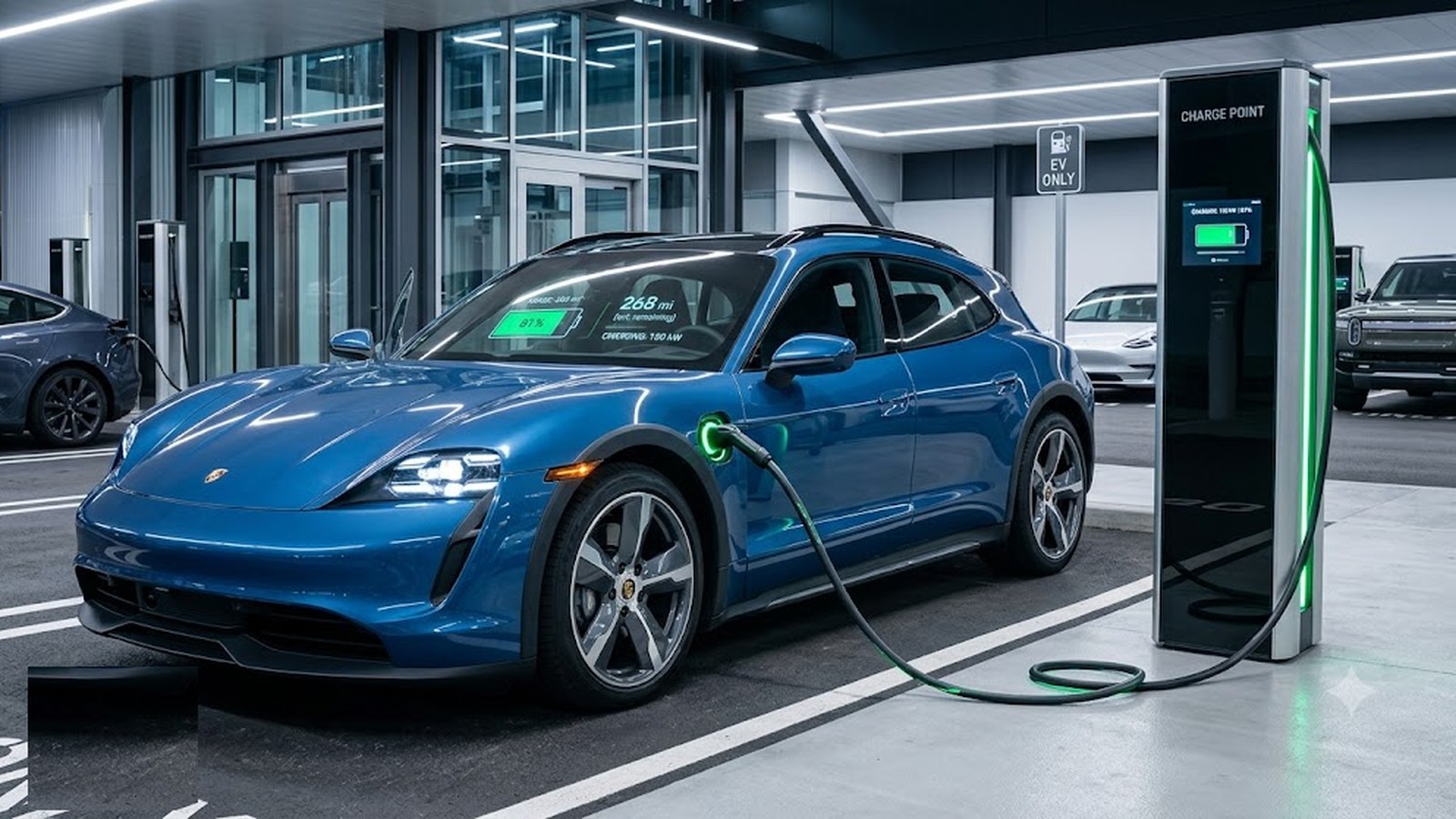
What EV and hybrid battery warranties cover, how range estimates can mislead, and when battery problems may support a California lemon law claim.




 Written by Babak Hashemi, Esq.
What EV and hybrid battery warranties cover, how range estimates can mislead, and when battery problems may support a California lemon law claim.
The battery is the heart of an EV or hybrid, and many manufacturers cover it under a separate warranty that outlasts the standard bumper-to-bumper coverage. These warranties focus on battery-specific issues such as capacity loss and defects.
Battery warranties often run far longer than a typical vehicle warranty, commonly from 8 years/100,000 miles up to 10 years/150,000 miles. Some include a battery range or capacity assurance, meaning the manufacturer must repair or compensate if the battery loses too much of its original capacity within the coverage period.
Marketing and on-board range estimators promise worry-free driving, using algorithms that weigh driving habits, terrain, and weather. In practice those estimates can be optimistic, and when range falls short the dealer often offers only a software update or reset.
Persistent range loss, charging failures, or inconsistencies during the warranty period can be a sign of a deeper defect that is worth investigating rather than accepting at face value.
Battery warranty terms vary widely by automaker, including coverage length, what counts as failure, and how much capacity loss triggers a remedy. Review the terms carefully and compare them before you buy.
Be cautious with third-party or dealer-sold extended warranties, which do not always provide the same level of protection as the manufacturer's warranty under the lemon laws.
Manufacturers generally recommend avoiding extreme temperatures, parking in shade or a garage, charging regularly rather than letting the battery sit at a low charge, and taking advantage of regenerative braking.
Following these guidelines helps preserve both performance and your warranty coverage. Keep records of your charging habits and any problems, because they help an attorney develop your claim.
If your EV or hybrid experiences battery failure, range variances, or charging problems during the manufacturer's warranty period, you may have a lemon law claim.
Contact the Hashemi Law Firm for a no fee case evaluation with an experienced lemon law and civil litigation attorney.
Every battery loses some capacity over time, and manufacturers account for that with a stated capacity threshold. A claim generally turns on whether the loss exceeds what the warranty allows, not on whether any degradation occurred.
Because the threshold is written into the warranty, the specific document that came with the vehicle matters more than general industry expectations.
Range and charging problems are frequently addressed with a software update. If the same complaint returns after an update, each visit still counts as a repair attempt and should be documented.
Ask that the reported symptom be written on the repair order in your own words. A vague entry can make a recurring defect look like unrelated visits.
Learn more about our consumer warranty claims practice, or read related articles on our blog.
The Hashemi Law Firm represents clients throughout California from two Orange County offices — Foothill Ranch and Costa Mesa — with service across the San Francisco Bay Area and the Inland Empire and San Diego. Call (949) 464-8529 or contact us for a no fee case evaluation.
Every situation is different. For advice about your specific matter, contact The Hashemi Law Firm for a no fee consultation.
EV and hybrid batteries can be covered under the California lemon law when the defect is covered by the manufacturer’s warranty and cannot be repaired after a reasonable number of attempts. If a battery defect is covered by the manufacturer's warranty and cannot be repaired after a reasonable number of attempts, the same Song-Beverly Act protections that apply to other vehicle defects may apply.
Battery warranties commonly run from 8 years or 100,000 miles up to 10 years or 150,000 miles, and terms vary by manufacturer. The warranty booklet for the specific vehicle controls.
Keep every repair order, note the dates and symptoms, and save charging records or screenshots showing range and charge behavior over time.
Send us a few details and we’ll reach out. No fee, no obligation.
Get a no-fee, no-obligation case evaluation today.