
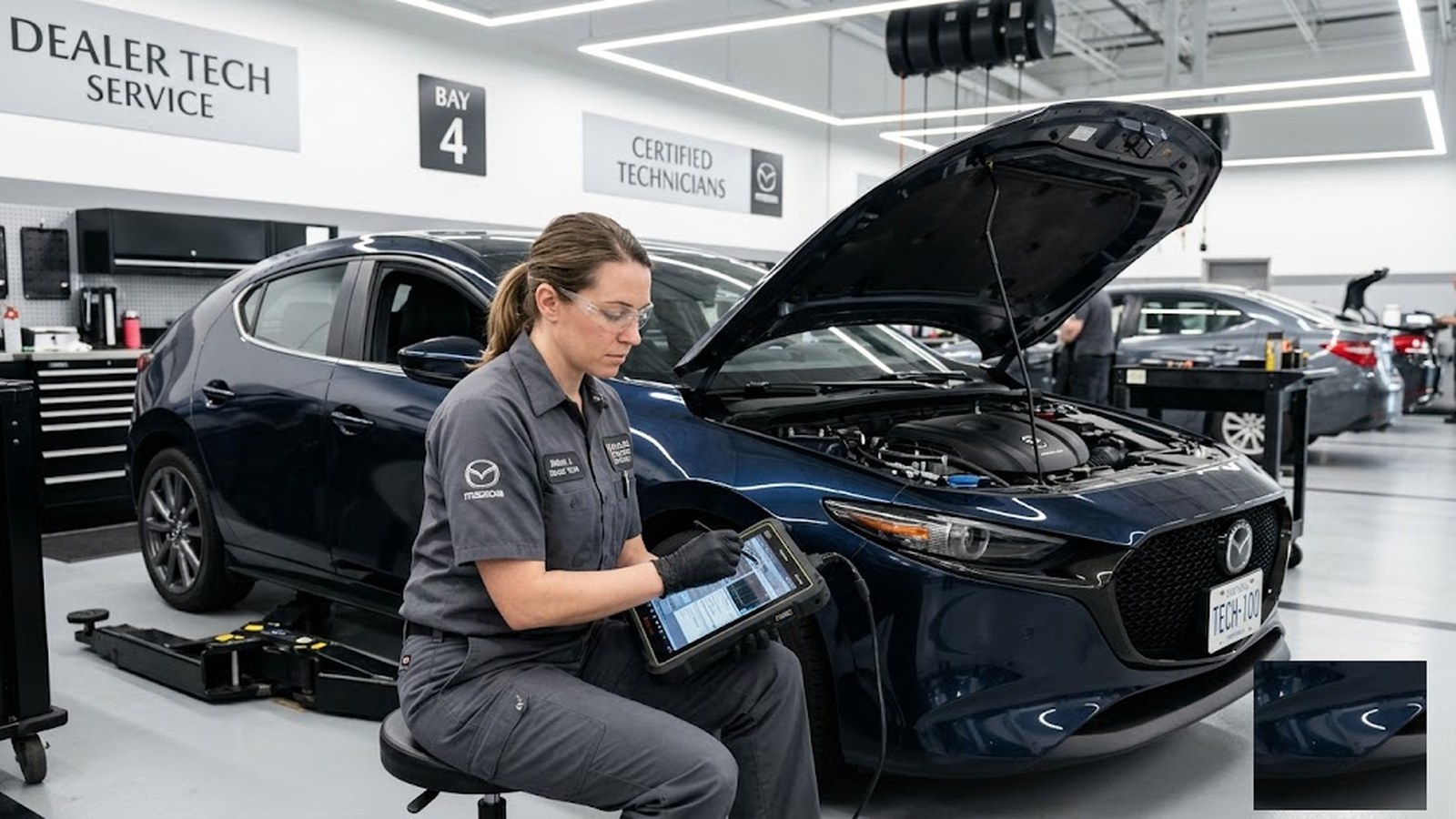
Why modern vehicle electronics make defects harder to diagnose and repair, and what that means for your lemon law rights.




 Written by Babak Hashemi, Esq.
Why modern vehicle electronics make defects harder to diagnose and repair, and what that means for your lemon law rights.
Today's vehicles rely on dozens of electronic control units and software modules that manage the engine, transmission, brakes, and more. Technicians increasingly depend on diagnostic tools and software algorithms rather than hands-on experience and test drives.
When those tools cannot reproduce or pinpoint a fault, the result is often a could-not-duplicate note and a defect that keeps coming back, costing the owner time and money instead of saving it.
Car modules act as the brain of the vehicle, controlling systems and making real-time adjustments. But when an electronic control unit is itself defective, the diagnostic software that depends on it can fail to identify the real problem.
Sophisticated systems are supposed to remove guesswork, yet they can also mask the root cause, leaving the owner with a recurring problem and repeated visits to the repair facility.
As vehicle systems grow more advanced, a knowledge gap can open between the technology and the technicians expected to sell and service it. Forward-thinking dealers invest in training, but the gap is real.
Manufacturers also limit how much time a technician may spend diagnosing a problem, which can lead to partial diagnostics and incomplete repairs, and a defect that is never truly fixed.
Accurate diagnosis starts with clear communication with your service advisor. Provide photos, video, and specific details about when and how the problem appears, and make sure each visit is documented.
That record creates evidence of the defect and the repair history, which is exactly what supports a lemon law claim if the problem cannot be resolved.
When diagnostic tools and repeated repair attempts fail to isolate the issue, a persistent problem becomes a defect under the law.
If your vehicle has been in and out of the shop for the same issue, contact the Hashemi Law Firm for a no fee case evaluation.
Many electronic defects appear only under particular conditions: a certain temperature, a specific speed, or after the vehicle has been sitting. A scan performed in a service bay may not recreate any of those conditions.
When a fault does not store a code, the technician has little to work from, and the visit can end with no repair performed even though the problem is genuine.
Record when the problem happens, what you were doing, and what the vehicle did. Short phone videos of a warning light or screen behavior are often more persuasive than a written description.
Ask the service advisor to enter your description verbatim on the repair order, and keep a copy of every visit even when nothing was replaced.
Learn more about our California lemon law practice, or read related articles on our blog.
The Hashemi Law Firm represents clients throughout California from two Orange County offices — Foothill Ranch and Costa Mesa — with service across the San Francisco Bay Area and the Inland Empire and San Diego. Call (949) 464-8529 or contact us for a no fee case evaluation.
Every situation is different. For advice about your specific matter, contact The Hashemi Law Firm for a no fee consultation.
Not necessarily. A repair visit still documents that you presented the vehicle for the defect. A pattern of repeat visits for the same complaint can support a claim even when the dealer did not reproduce the fault.
Generally yes. A software update performed to address a reported defect is a repair attempt, and the visit should appear on a repair order.
Ask for that statement in writing on the repair order. A documented refusal to repair can itself become relevant evidence.
Send us a few details and we’ll reach out. No fee, no obligation.
Get a no-fee, no-obligation case evaluation today.